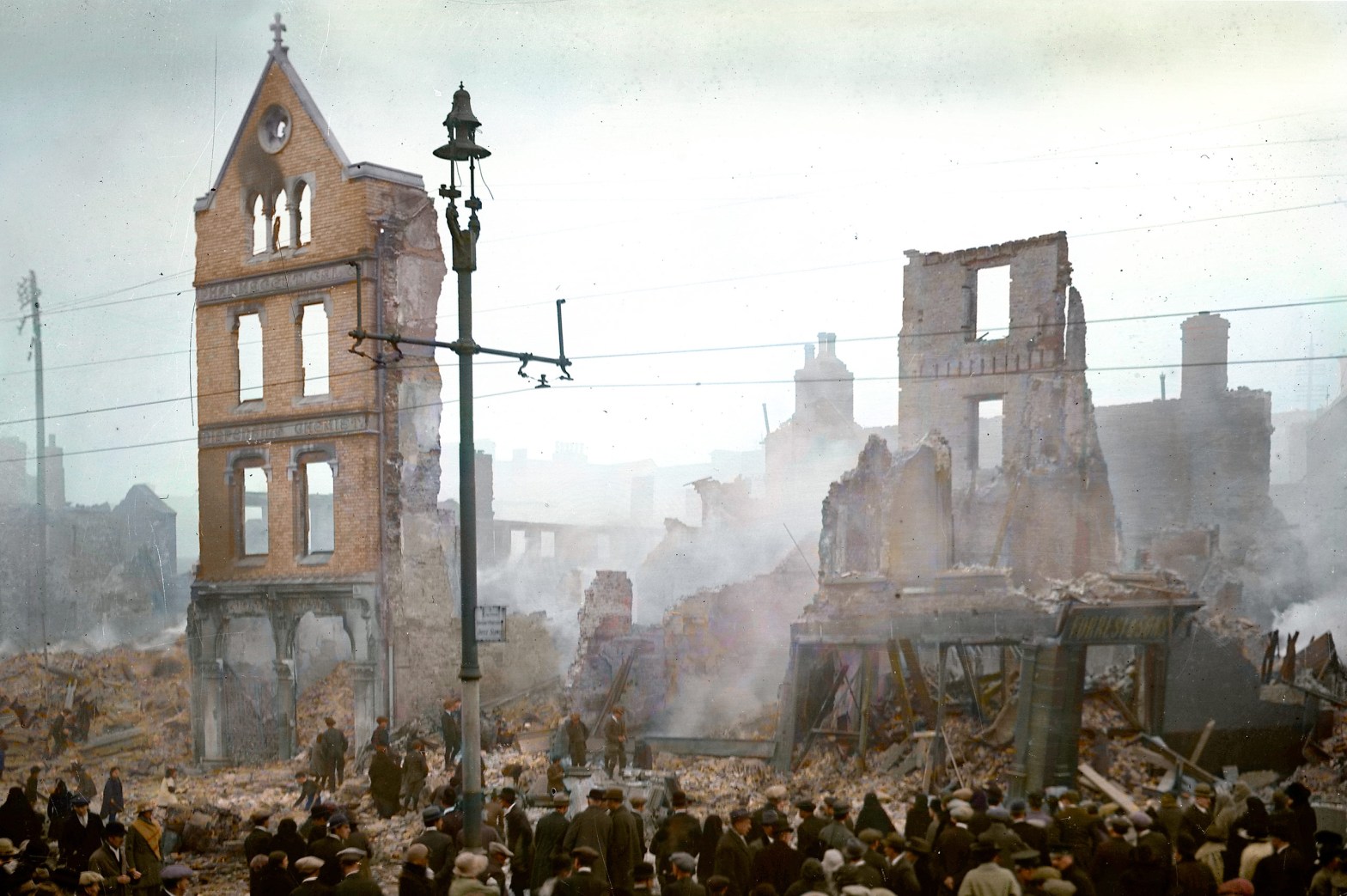
Kicking off a landmark centenary year for Cork and its role during the War of Independence, in collaboration with creative/production agency bigO, I undertook the mammoth feat of putting the Rebel City’s story into words for the interactive exhibition, Cork 1920: The Burning of a City.

Hosted by historic venue and client, St Peter’s Cork, this year-long exhibition uncovered thought-provoking stories, archival material, rare photographs and compelling witness statements surrounding an unprecedented chapter in the city’s history.
A spotlight on history
A hugely tumultuous year in Cork City’s lifespan, 1920 was the second year of the War of Independence. It saw two Lord Mayors die tragically, martial law imposed and the British Crown forces’ image of invincibility wane. A shocking end to an already tension-filled year, 1920 came to a head with the devastating burning of the city on 11 December, which saw British Auxiliaries burn acres of the city centre, destroying lives, homes and businesses. The burning of Cork is considered the most extensive single act of vandalism during Ireland’s nationalist struggle.
Through months of meticulous research, my role was to devise the exhibition’s narrative, consider which elements would best resonate with its audience, remain faithful to history and craft copy that would leave a lasting impact on the reader while seamlessly fitting the context in which it would be absorbed.
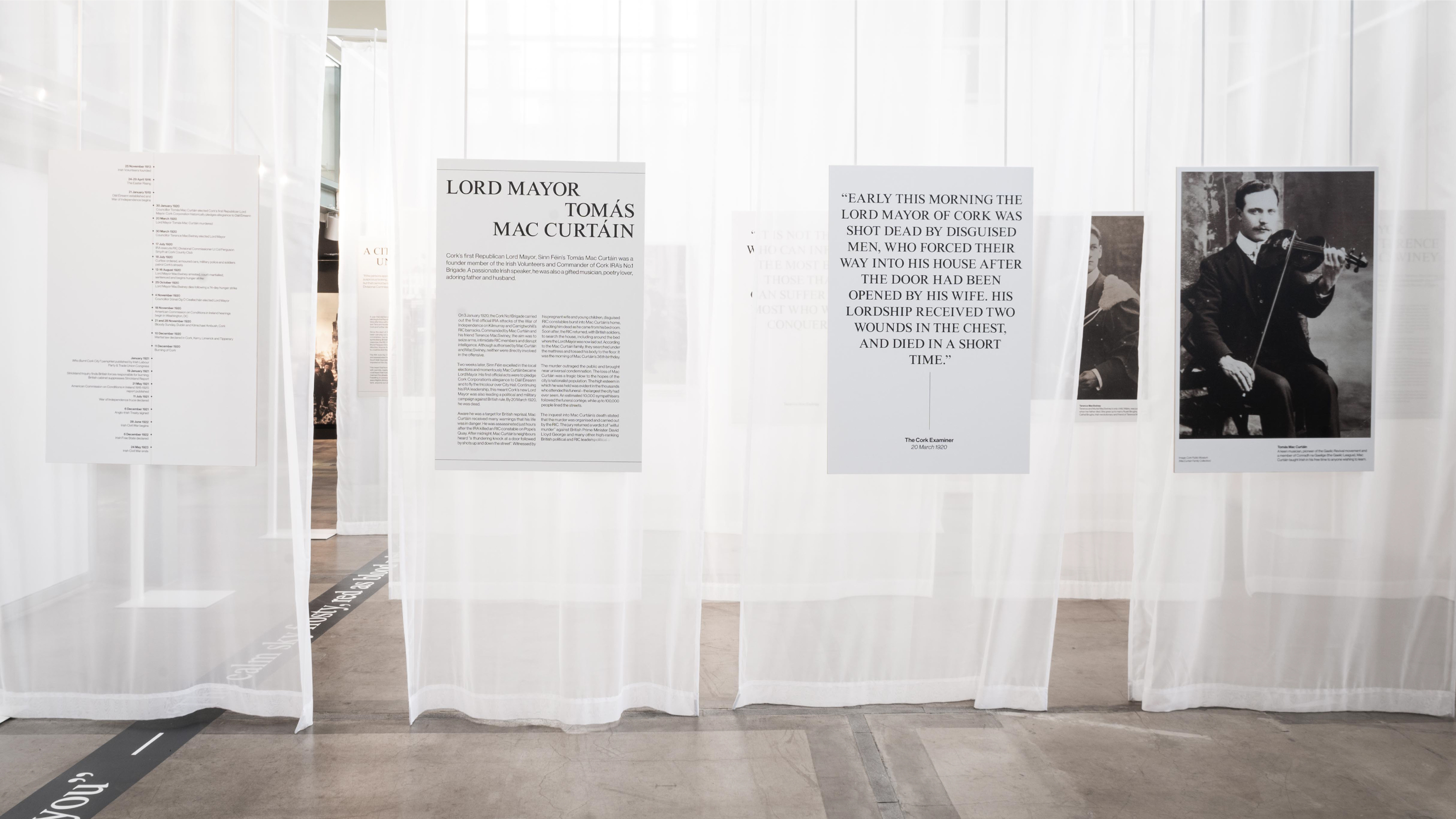
Via panels of carefully-composed copy, photography and an array of audio-visual material and video, the exhibition’s aim was to shine a spotlight on the Cork of 100 years ago and the arduous struggles its people faced.
Powerful stories told with punch
On entering the space, the visitor’s first interaction with the content was through a freestanding, LED-illuminated introductory panel. This panel grounded the whole exhibition, giving much-needed historic context from the outset. With so much information to grasp before the timeline of the exhibition even unfolded, this panel had to give a snapshot of Cork’s palpable powder keg atmosphere in 1920 and pique the visitor’s curiosity.
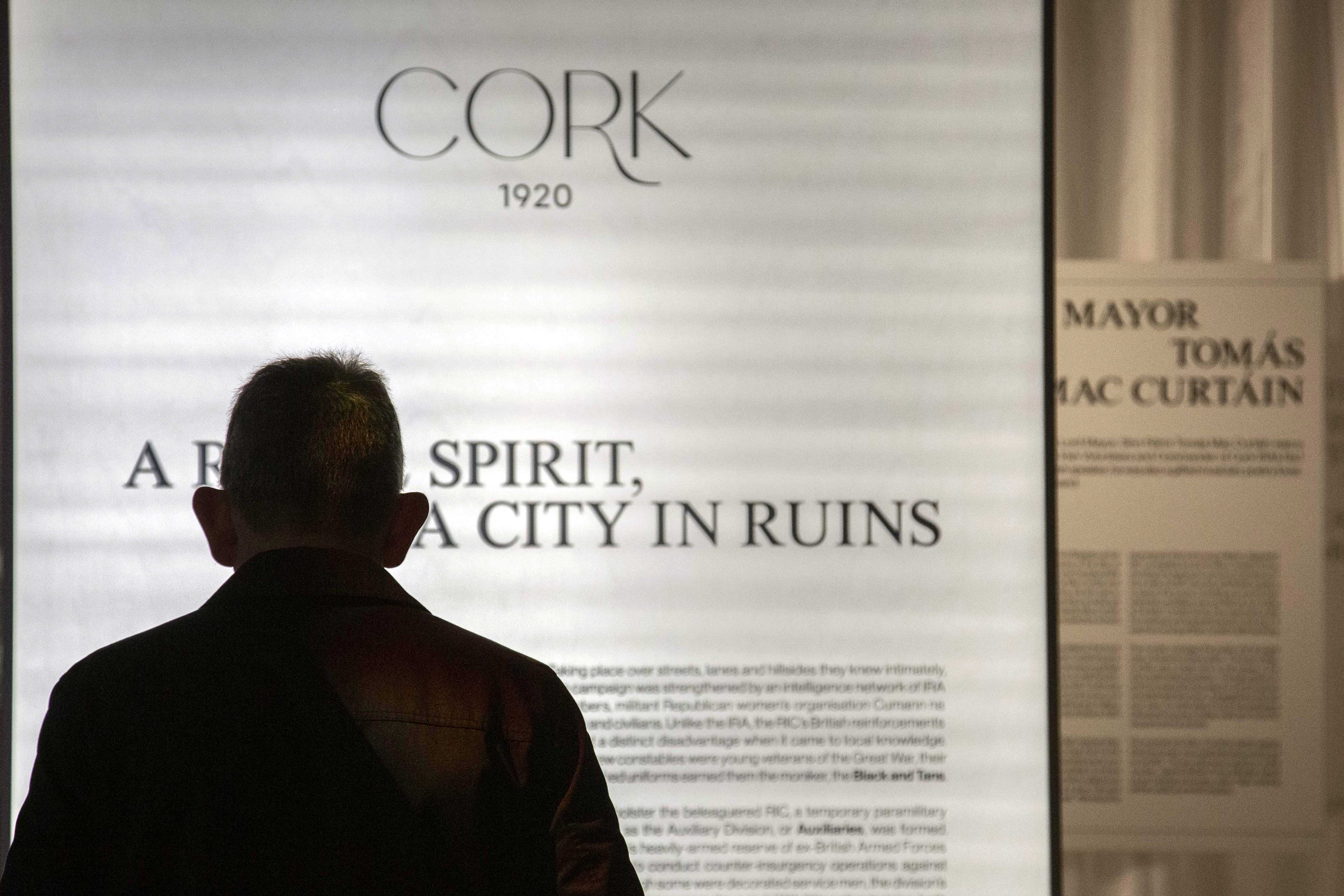
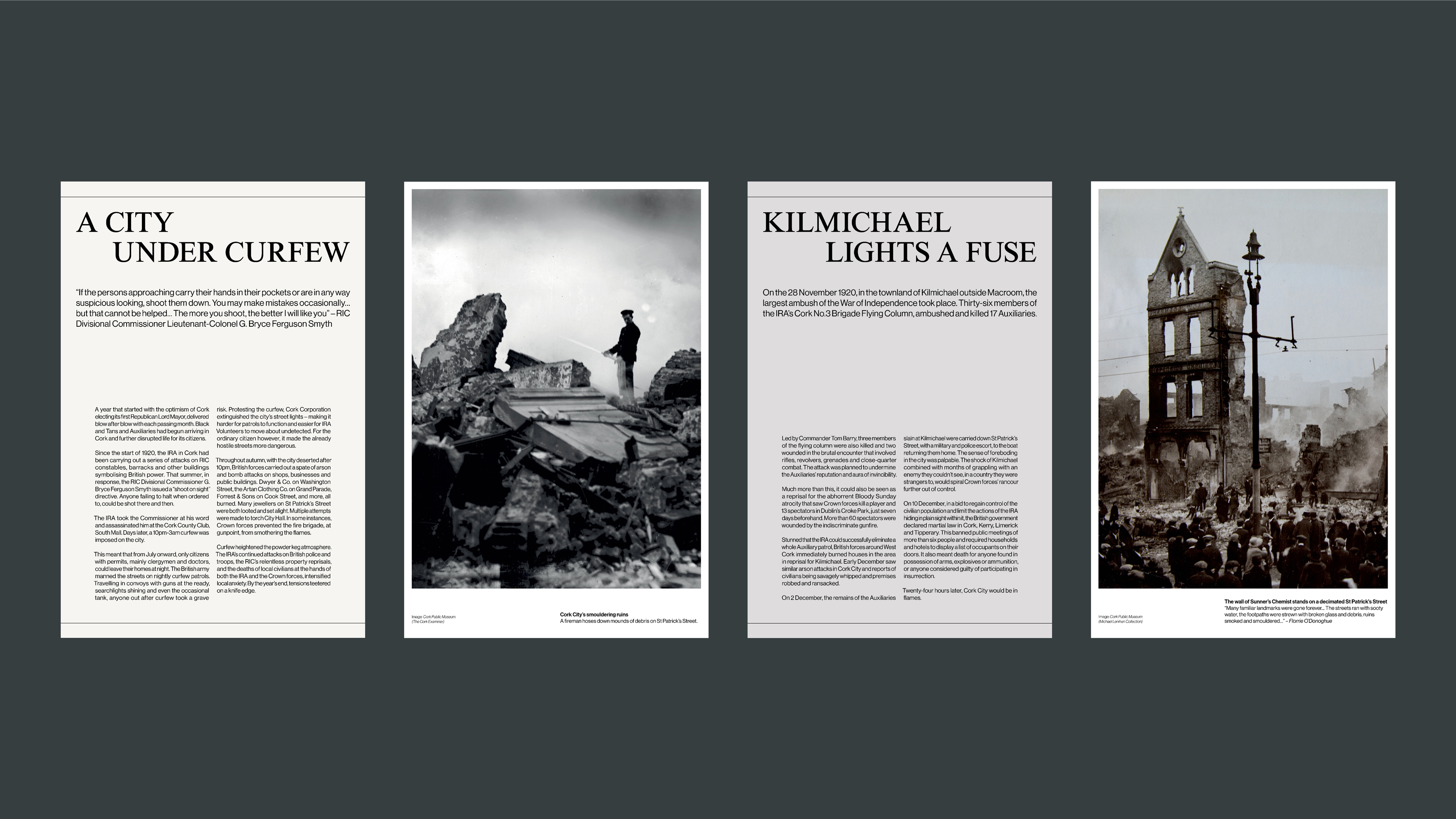
A series of hanging muslin panels, displaying foam boards of compelling text, evocative quotes and arresting imagery then guided the visitor through the space. Essentially acting as soft walls that contained the visitor and focused their attention on the content before them, the muslin panels created a pathway through the space.
To effectively tell the complex Cork 1920 story in a way that would engage and impact the visitor, the hanging panels were grouped into thematic chapters. This allowed us to chronologically detail exactly what the visitor needed to have understood about Cork’s political climate, local life in 1920, Ireland under colonial rule and the major players in the War of Independence.
All of this needed to be understood before they reached the climax of a five-acre city-centre arson attack at the hands of British forces.
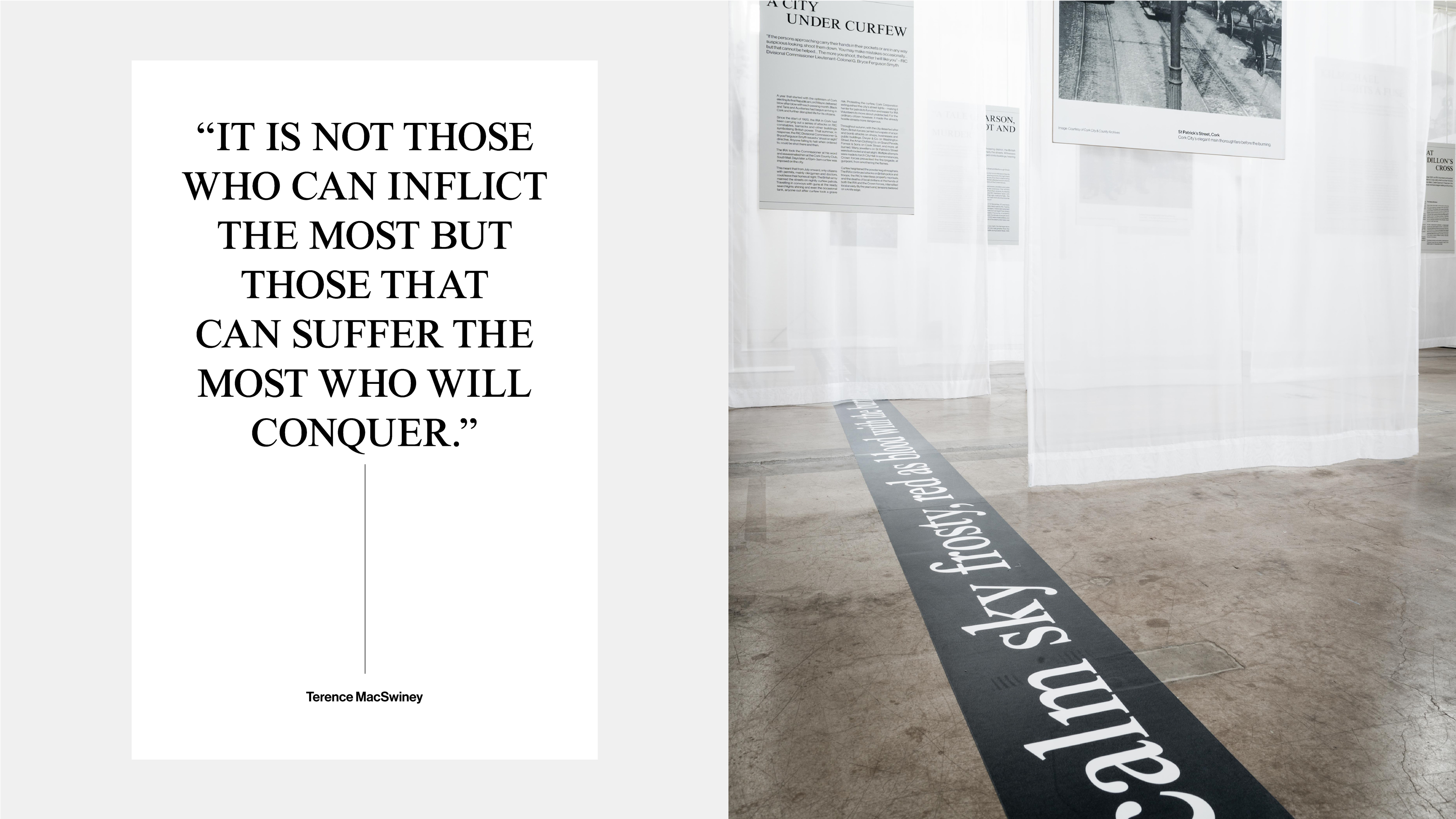
The panel text needed to be concise, engaging, apolitical but dynamic and of course, include the odd cliff-hanger. I strategically crafted this content after much research and generous access to University College Cork’s Special Collections Unit and its many witness statements, handwritten documents, rare publications, historic reports and more.
Panel text needed to be concise, engaging, apolitical but dynamic and of course, include the odd cliff-hanger
Exceptional and rarely-seen photographs were curated from collections courtesy of Cork Public Museum and lauded Cork historian Michael Lenihan. With the hanging panels’ layout grouping powerful text, eye-catching pull quotes and captivating photographs together in batches of three or four – the visitor couldn’t fail to be immersed in the story woven around them, the three types of content working in impactful tandem.
Bringing history to life
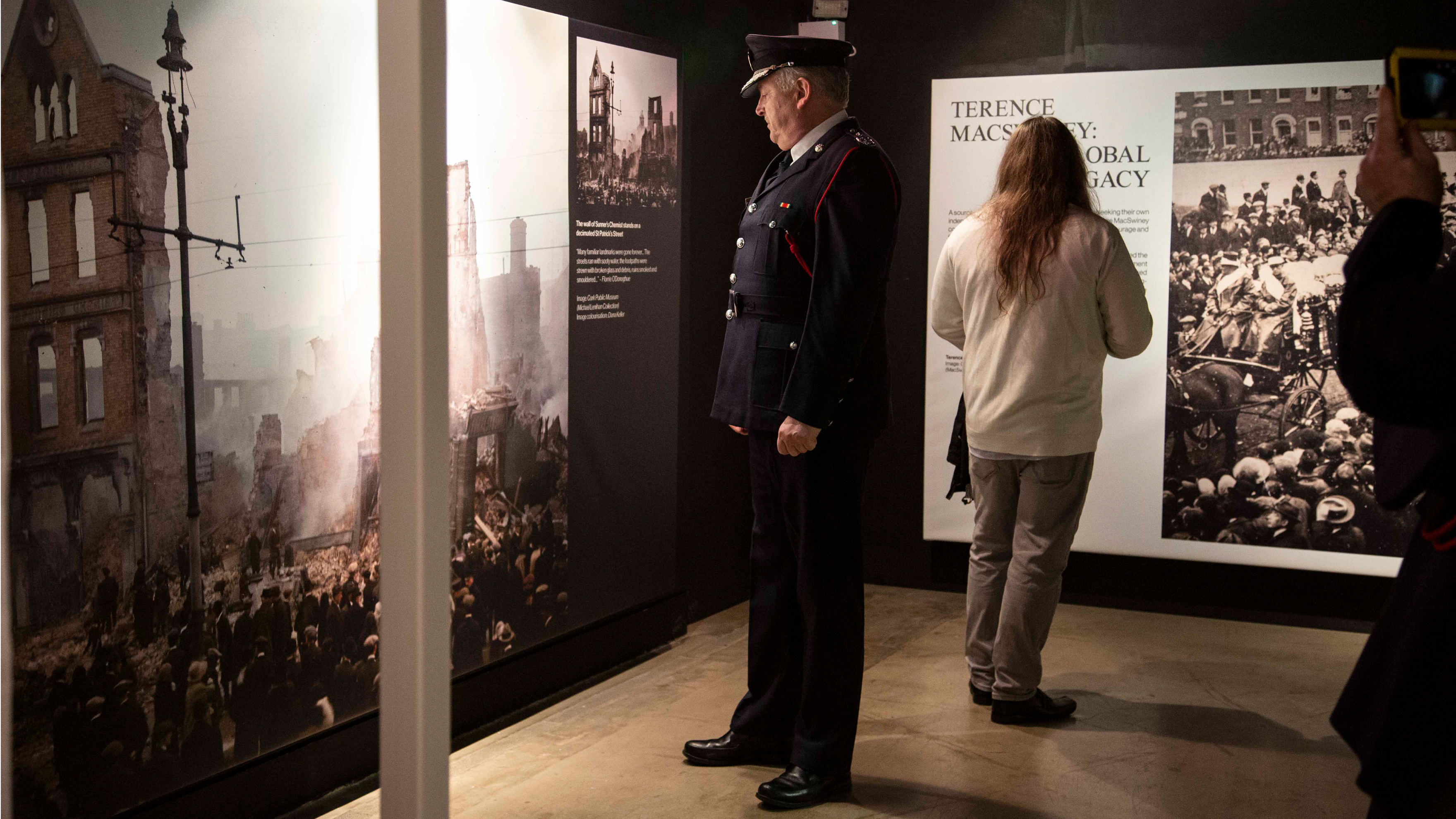
To better translate the scale of one Cork figure’s global impact, a map of the world was created and spanned across one of the space’s walls. I then wrote batches of short, punchy text to pepper the map with, detailing the impressive reach of Lord Mayor Terence MacSwiney’s influence on the likes of America, India, South Africa and beyond.
Audio-visual experiences
With so much information to present the visitor with, the exhibition team decided that some of the more compelling elements deserved standalone presentations. Two bespoke audio-visual boxes were designed to display immersive video content to really transport the visitor into certain chapters of the Cork 1920 story.
For the video, A Night to Remember, 11 December 1920, we selected choice audio and testimonies from the very people who witnessed the burning. Coupled with powerful text overlay and arresting archive footage, this video immediately transported the viewer to that fateful night.
The Rebel Women video script started life as panel copy but was later streamlined into dynamic video text, elevating the pursuits and risks taken by Cork’s daring women.
A companion piece for the exhibition, I also scripted a social media video commemorating the centenary of Lord Mayor Tomás Mac Curtáin’s death.
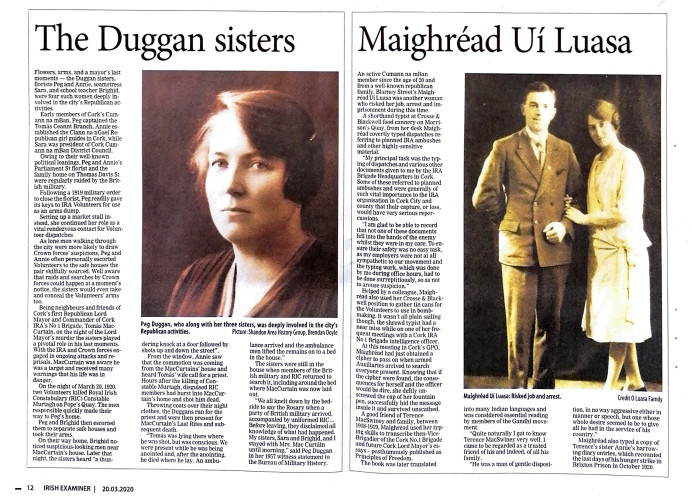
To highlight the role of the women of Cork in 1920, I wrote a 3,500-word feature for the Irish Examiner. The piece was printed in the paper’s commemorative centenary supplement in March 2020.
For media coverage of the exhibition’s opening, see Cork Beo and The Irish Times.
 Sarah Folan
You must be logged in to post a comment.